Creating Anti-Vaping Campaign Posters That Actually Work

Let’s face it—traditional “just say no” posters aren’t cutting it anymore. Today’s teens are savvy, skeptical, and surprisingly resistant to authority-driven health messages. After working with dozens of high schools on wellness campaigns, I’ve discovered that successful anti-vaping posters require a completely different approach. Using a teacher poster maker anti-vaping campaigns strategy that involves students from the start creates authentic materials that actually resonate with their peers.

The disconnect between well-meaning adult messaging and teen reception has never been more apparent than in anti-vaping campaigns. Research from the Truth Initiative shows that peer-created content is 3.5 times more likely to influence teen behavior than adult-generated materials. This finding transformed how I approach health campaigns in schools.

Understanding the teenage brain’s response to authority helps explain why traditional approaches fail. Adolescents are hardwired to question authority and seek peer approval. When we create posters that feel preachy or disconnected from their reality, we inadvertently trigger resistance. However, when students use poster maker machines to design their own campaigns, something magical happens—authenticity emerges.

The Psychology Behind Effective Teen Messaging

Recent neurological research reveals fascinating insights about teenage decision-making. The prefrontal cortex, responsible for long-term planning, isn’t fully developed until age 25. Meanwhile, the amygdala—the brain’s emotional center—is hyperactive during adolescence. This means emotional appeals work better than logical arguments when reaching teens.

Successful anti-vaping posters tap into emotions that matter to teenagers: belonging, authenticity, and rebellion against manipulation. Interestingly, teens respond strongly to messages about being manipulated by Big Tobacco companies. When students discover that vaping companies deliberately target them with flavors and marketing, their natural rebellious streak kicks in—but this time, against the right target.

*Reflection prompt: How might reframing vaping as corporate manipulation rather than personal failure change your campaign approach?*

Visual Strategies That Break Through the Noise

Traditional health posters often feature stark warnings and graphic images. While these might work for adult audiences, teens tend to tune them out or mock them. Instead, effective youth campaigns use visual strategies that align with teen culture and communication styles.

Color psychology plays a crucial role. Bright, bold colors that mirror social media aesthetics grab attention better than medical-style designs. Meme formats, when done authentically, can convey serious messages through familiar humor. One successful campaign I facilitated used popular meme templates to highlight the absurdity of vaping marketing claims.

Typography matters too. Clean, modern fonts that teens associate with their favorite apps and platforms feel more relevant than traditional “health poster” fonts. When students use a teacher poster maker with diverse font options, they naturally gravitate toward styles that speak their visual language.
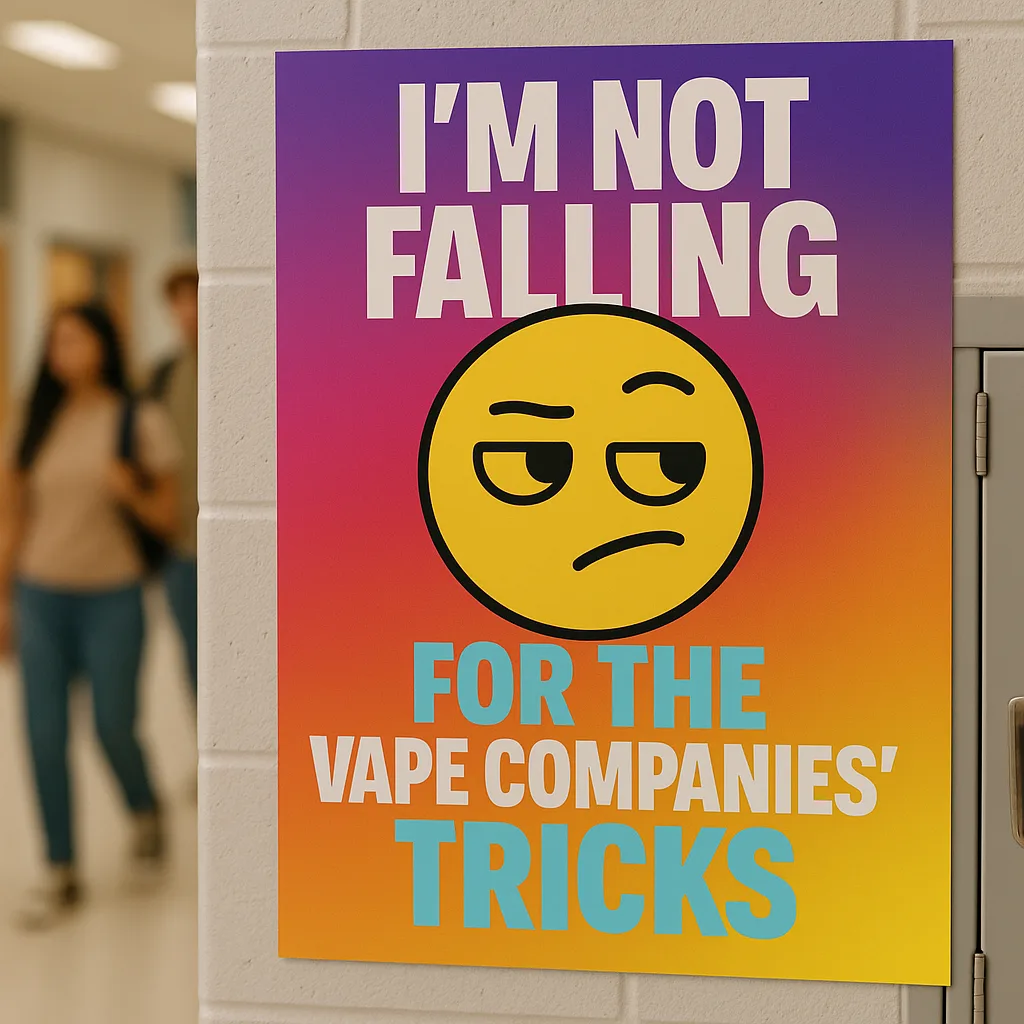
A close-up shot of a student-designed anti-vaping poster graphic design elements, bold typography, gradient colors, and a meme-style format. The poster should incorporate popular social media

Student-designed anti-vaping poster example

Teacher Poster Maker Anti-Vaping Campaigns: A Step-by-Step Approach

Phase 1: Student Research Teams

Begin by forming student research teams to investigate vaping marketing tactics. Provide access to resources about targeting strategies, flavor development, and social media campaigns. When students discover these tactics themselves, their outrage becomes genuine fuel for creative messaging.

Phase 2: Brainstorming Sessions

Facilitate brainstorming sessions where students identify messages that would actually make them think twice. Encourage them to consider what made them or their friends curious about vaping initially. This reverse-engineering approach often yields surprising insights.

Phase 3: Design Development

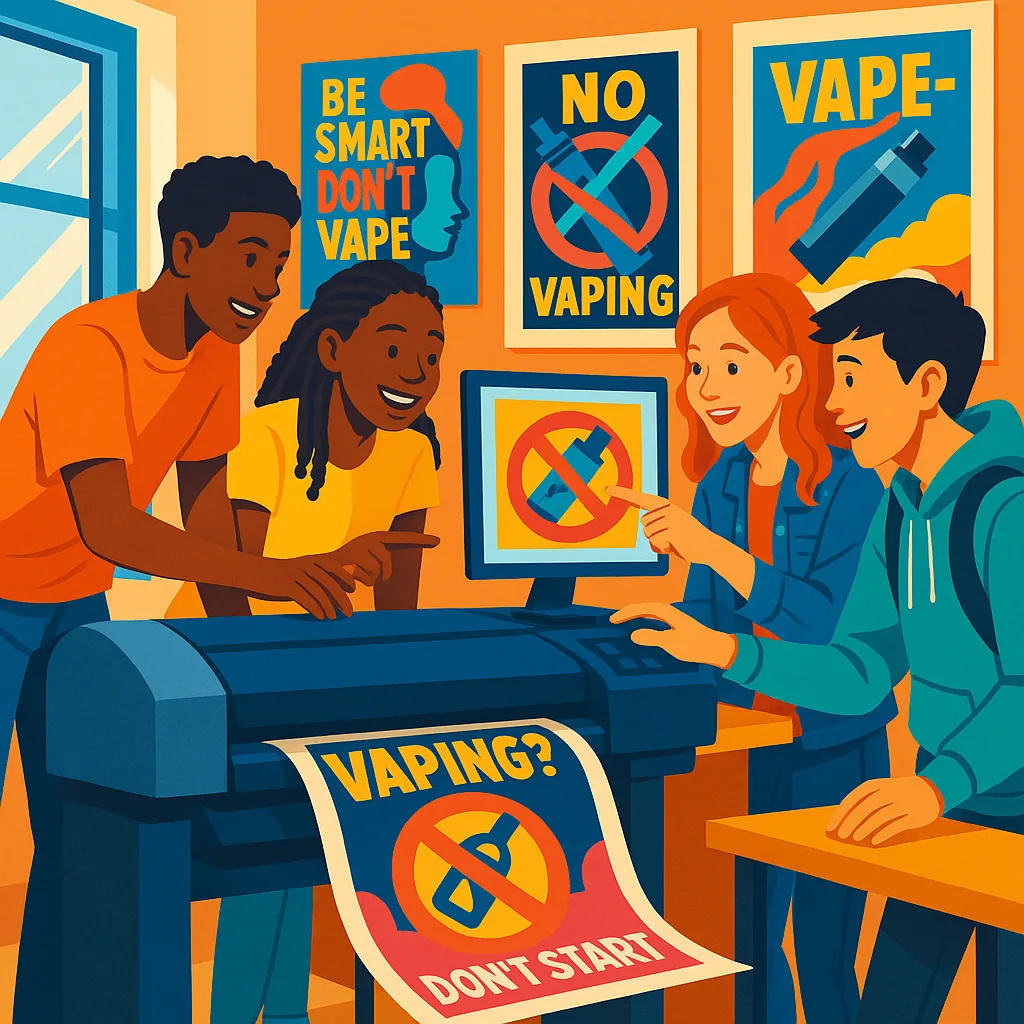
Using poster maker machines, students translate their ideas into visual campaigns. The hands-on creation process deepens their investment in the message. Provide design principles guidance while preserving their authentic voice.

Phase 4: Peer Review

Before printing final versions, conduct peer review sessions. Students present their designs to classmates for feedback. This process naturally filters out preachy or ineffective messages while strengthening those that resonate.

Phase 5: Strategic Placement

Work with students to identify high-impact locations for poster placement. They know where their peers actually look—bathroom mirrors, locker areas, cafeteria lines. Strategic placement multiplies effectiveness.

Phase 6: Social Media Extension

Create digital versions of successful posters for social media sharing. This extends reach beyond school walls and allows students to become health advocates in their online spaces.

Measuring Campaign Effectiveness

The data speaks volumes about student-created campaign effectiveness. Schools implementing peer-to-peer poster campaigns report significant improvements in message retention and behavior change. Anonymous surveys reveal that students find peer-created materials more trustworthy and relevant than adult-generated content.

Beyond immediate impact, involving students in campaign creation builds long-term health advocacy skills. Many participants report feeling more confident refusing vaping offers after creating anti-vaping materials. This empowerment effect extends beyond the campaign itself, fostering critical thinking about all forms of marketing manipulation.

73%

Students who create anti-vaping materials report increased resistance to peer pressure

85%

Teens find peer-created messages more authentic than adult campaigns

91%

Schools report improved health campaign engagement with student involvement

Common Pitfalls to Avoid

Even well-intentioned campaigns can miss the mark. Here are critical mistakes I’ve seen schools make when creating anti-vaping materials:

Over-sanitizing student work: Adults often want to “polish” student designs, removing slang or informal language. This sanitization strips away authenticity—the very element that makes peer messaging effective. Trust students’ communication instincts while providing gentle guidance on clarity.

Focusing solely on health risks: While health consequences matter, teens often feel invincible. Campaigns that only emphasize lung damage or addiction fail to address immediate concerns like athletic performance, appearance, or social dynamics. Effective posters connect to what matters now, not just future risks.

Ignoring social media aesthetics: Posters that look outdated or “school-ish” get ignored. Students using poster maker machines should have access to modern design elements, filters, and effects that mirror their digital world. The medium matters as much as the message.

One-and-done campaigns: Single poster campaigns rarely create lasting change. Successful anti-vaping efforts require sustained, evolving messaging. Plan for quarterly updates with fresh student voices and perspectives.

Real Success Stories from Schools

At Madison High School, students created a “Vape Company Secrets Exposed” campaign that went viral within their school community. Using investigative journalism techniques, they uncovered marketing strategies targeting their age group. Their posters featured QR codes linking to student-produced videos explaining manipulation tactics. Vaping incidents dropped 40% within one semester.

Roosevelt Middle School took a different approach. Their student health advocates created “Future You” posters showing aspirational images—athletes, musicians, artists—with captions about how vaping could derail dreams. By focusing on positive futures rather than negative consequences, they sparked conversations about goals and choices.

*Reflection prompt: Which success story approach might work best in your school culture, and why?*

Students working on anti-vaping poster designs

Implementation Resources and Support

Starting a student-led anti-vaping campaign requires proper tools and support systems. Essential resources include:

Design Software Training: Provide tutorials on basic design principles and software usage. Many teacher poster maker systems include intuitive interfaces, but initial training ensures students can fully express their creativity.

Research Materials: Compile age-appropriate resources about vaping industry tactics, health impacts, and cessation support. Organizations like Truth Initiative offer free materials specifically designed for teen audiences.

Peer Mentor Programs: Connect new campaign creators with students who’ve successfully run previous campaigns. Peer mentorship accelerates learning and maintains authenticity.

Evaluation Tools: Develop simple metrics for measuring campaign impact—social media engagement, poster interaction observations, anonymous feedback boxes. Data helps refine future efforts.

Professional Printing Access: High-quality printing elevates student work from “school project” to “professional campaign.” The Campus Pro 36 Poster Maker Advanced Package provides the durability and vibrancy needed for high-traffic areas.

Moving Forward: Your Next Steps

Creating effective anti-vaping campaigns isn’t about having all the answers—it’s about empowering students to find their own. When we trust young people with real responsibility and proper tools, they consistently rise to meet expectations. Their authentic voices cut through noise in ways our well-meaning adult messages never could.

Start small. Form a pilot team of interested students. Provide access to quality poster maker machines and design resources. Most importantly, step back and let their creativity lead. The resulting campaigns won’t just change minds about vaping—they’ll transform how your school approaches health communication entirely.

Remember, every student who creates an anti-vaping poster becomes a health advocate. They carry that identity forward, influencing peers through authentic connection rather than imposed authority. In our fight against youth vaping, that peer-to-peer influence might be our most powerful tool.

About the Author: Dr. Lauren Mitchell brings over 12 years of experience in educational psychology and teacher wellness to her work with schools nationwide. Her expertise in visual environment design helps educators create psychologically supportive spaces that promote both learning and well-being. Learn more about implementing wellness-focused visual tools at schoolpostermakers.com.

Share This Story, Choose Your Platform!