

School Poster Maker Water Conservation Campaigns
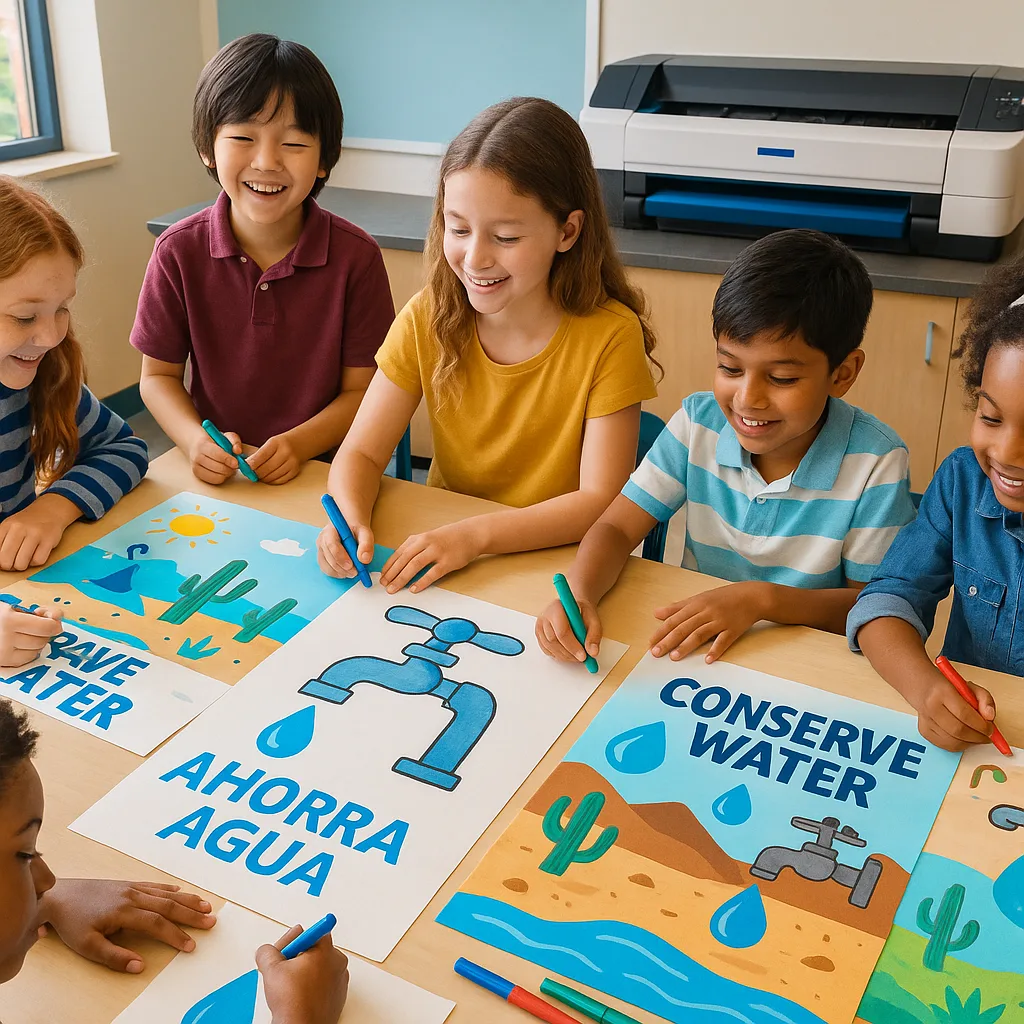
As an educator who has witnessed firsthand the impact of visual learning tools, I’m continually amazed by how poster maker machines can catalyze real environmental change. Furthermore, when students take ownership of conservation messaging, something magical happens—they don’t just learn about water conservation; they become its champions.
Recently, I visited several schools across Arizona, New Mexico, and Southern California that have transformed their hallways into galleries of environmental awareness. Through student-designed posters created on their school poster maker systems, these institutions are nurturing a generation of water-conscious citizens. Additionally, they’re reaching entire communities with bilingual messaging that bridges cultural gaps and amplifies conservation efforts.
The Power of Visual Messaging in Drought Education
Visual communication transcends language barriers and age differences, making it particularly effective for water conservation education. When students create their own conservation posters, they internalize the message far more deeply than through traditional lectures alone. Moreover, peer-to-peer messaging through student artwork carries unique authenticity that resonates with young audiences.
Research shows that visual learning aids improve retention by up to 400%, and when combined with hands-on creation, the impact multiplies exponentially. Schools utilizing poster maker machines report increased student engagement in environmental topics and measurable changes in water-use behaviors both at school and at home.
Collaborative Design Process
Building a School Poster Maker Water Conservation Campaign
Creating an effective water conservation campaign requires careful planning and student involvement at every stage. First, establish clear goals for your campaign—whether it’s reducing school water usage by a specific percentage or raising awareness about local drought conditions. Next, involve students in researching local water challenges and brainstorming visual solutions.
The most successful campaigns I’ve observed follow a structured approach: education, creation, implementation, and evaluation. Students begin by learning about water cycles, drought impacts, and conservation strategies. Then, they translate this knowledge into compelling visual messages using the school’s poster printing equipment. Subsequently, these posters are strategically displayed throughout the school and community. Finally, students track the campaign’s impact through water usage data and behavioral surveys.
Success Stories from the Field
Desert Vista Elementary
Launched 'Every Drop Counts' campaign with 150+ student posters30% Reduction
Through weekly poster rotations created on their school poster maker, Desert Vista achieved a 30% reduction in water usage within one semester. Students designed bilingual posters featuring water-saving tips and creative conservation mascots.Rio Grande Middle School
Student posters displayed in 20+ local businessesCommunity Impact
Using their Campus Pro 36 poster maker, students created weather-resistant posters for community display. Local businesses reported increased customer awareness and participation in water conservation efforts.Sunset High School
Won state environmental award for poster campaignAward Winner
Environmental science students designed a comprehensive poster series addressing agricultural water use. Their professionally printed materials earned recognition from the state water conservation board.Creating Bilingual Conservation Materials
In our diverse Southwest communities, bilingual messaging isn’t just helpful—it’s essential. Effective water conservation campaigns must reach all community members, regardless of their primary language. Therefore, schools with poster maker machines have a unique advantage in creating culturally relevant, multilingual materials that resonate with entire families.
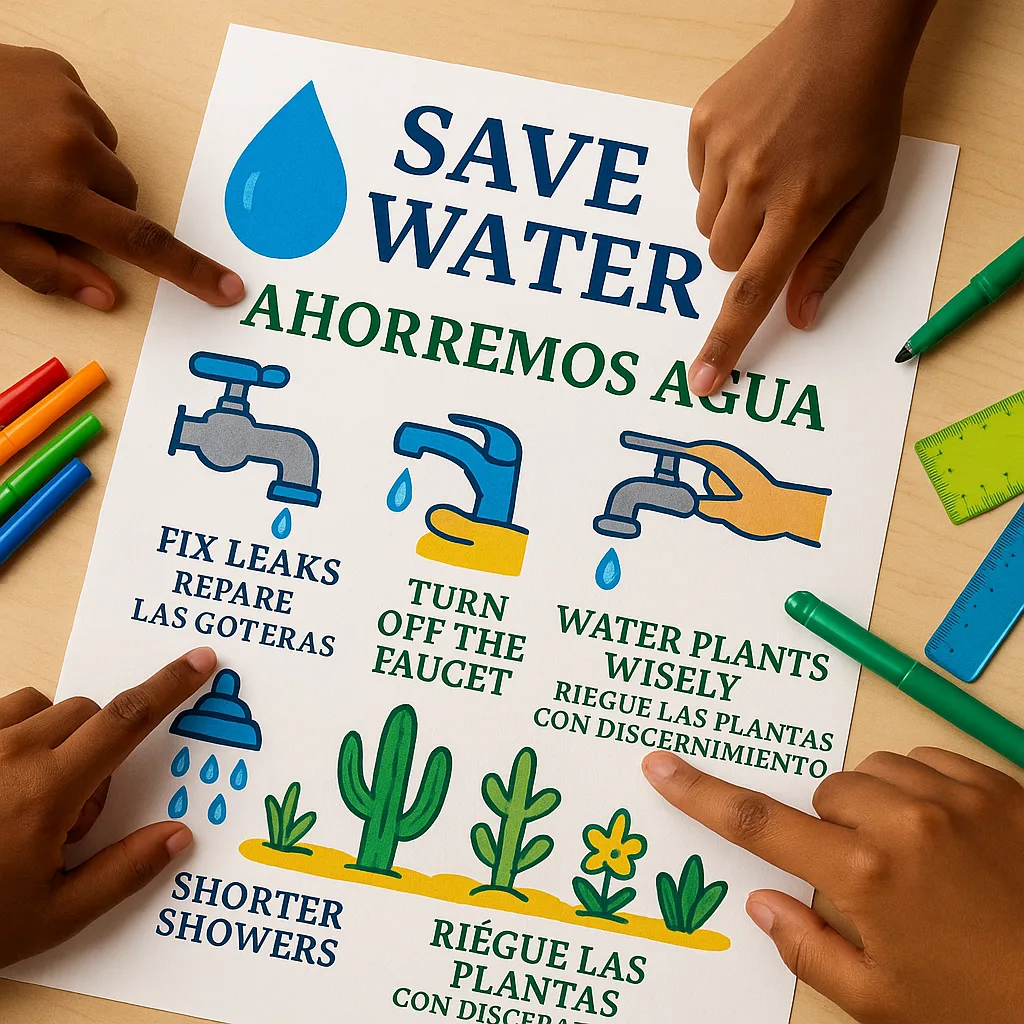
When developing bilingual posters, consider these key strategies: First, ensure translations are culturally appropriate, not just linguistically accurate. Second, use universal symbols and graphics that transcend language barriers. Third, involve native speakers in the design process to ensure authenticity. Finally, maintain consistent messaging across both languages to reinforce key conservation concepts.
Essential Bilingual Poster Elements
Visual Hierarchy: Place the most critical information in both languages at the top of your poster. Use color coding to distinguish between languages while maintaining visual cohesion.
Icons and Symbols: Incorporate universally understood water conservation symbols. Faucets, water drops, and conservation actions translate across cultures without words.
Cultural Sensitivity: Consider cultural attitudes toward water use when crafting messages. What resonates in one community may not in another.
Typography: Choose fonts that work well in both English and Spanish. Some decorative fonts may not display Spanish characters properly.
Implementing School Poster Maker Water Conservation Strategies
To maximize the impact of your conservation campaign, strategic implementation is crucial. Begin by identifying high-traffic areas where posters will receive maximum visibility. Cafeterias, main hallways, restrooms, and gym entrances are prime locations for conservation messaging. Additionally, consider rotating posters weekly to maintain fresh engagement and prevent “poster blindness.”
Successful schools often create poster series that build upon each other, introducing new conservation concepts gradually. For instance, Week 1 might focus on turning off taps, Week 2 on shorter showers, and Week 3 on reporting leaks. This sequential approach allows students to master one behavior before moving to the next.
Resources and Templates for Your Campaign
To help schools launch successful water conservation campaigns, we’ve compiled essential resources and design templates. These materials have been tested in real classrooms and refined based on student feedback and measurable results.
Design Templates Include:
• Water cycle infographics (English/Spanish)
• Conservation tip cards for different age groups
• Drought awareness fact sheets
• Water-saving challenge trackers
• Bathroom and kitchen reminder signs
• Outdoor irrigation guidelines
• School water audit templates
• Success celebration certificates
Campaign Support Materials:
• Student worksheet activities
• Teacher implementation guides
• Parent communication letters
• Community partnership proposals
• Media release templates
• Social media graphics
• Evaluation survey forms
• Monthly tracking spreadsheets
Looking Ahead: Sustaining Conservation Momentum
The most successful water conservation campaigns don’t end with the last poster—they evolve into lasting cultural changes within the school community. Schools that invest in poster maker machines find they can maintain conservation momentum by continuously refreshing their messaging and celebrating successes.
Consider establishing an annual “Water Warriors” program where students compete to design the most effective conservation posters. Display winning designs prominently and share them with neighboring schools. Furthermore, document water usage reductions and celebrate milestones with special recognition assemblies.
As we face increasing water scarcity in the Southwest, the role of education becomes ever more critical. By empowering students with the tools to create compelling conservation messages—whether through a Classroom Pro 24 for smaller schools or the versatile school poster maker systems for larger campuses—we’re not just saving water today. We’re cultivating a generation of environmental stewards who will lead conservation efforts for decades to come.
Remember, every poster created, every message shared, and every drop saved contributes to a more sustainable future. Your students aren’t just learning about conservation—they’re actively creating the change our communities desperately need.