

Teacher Poster Maker for Visual Book Clubs
Why Visual Book Clubs Are Trending in #EdTech
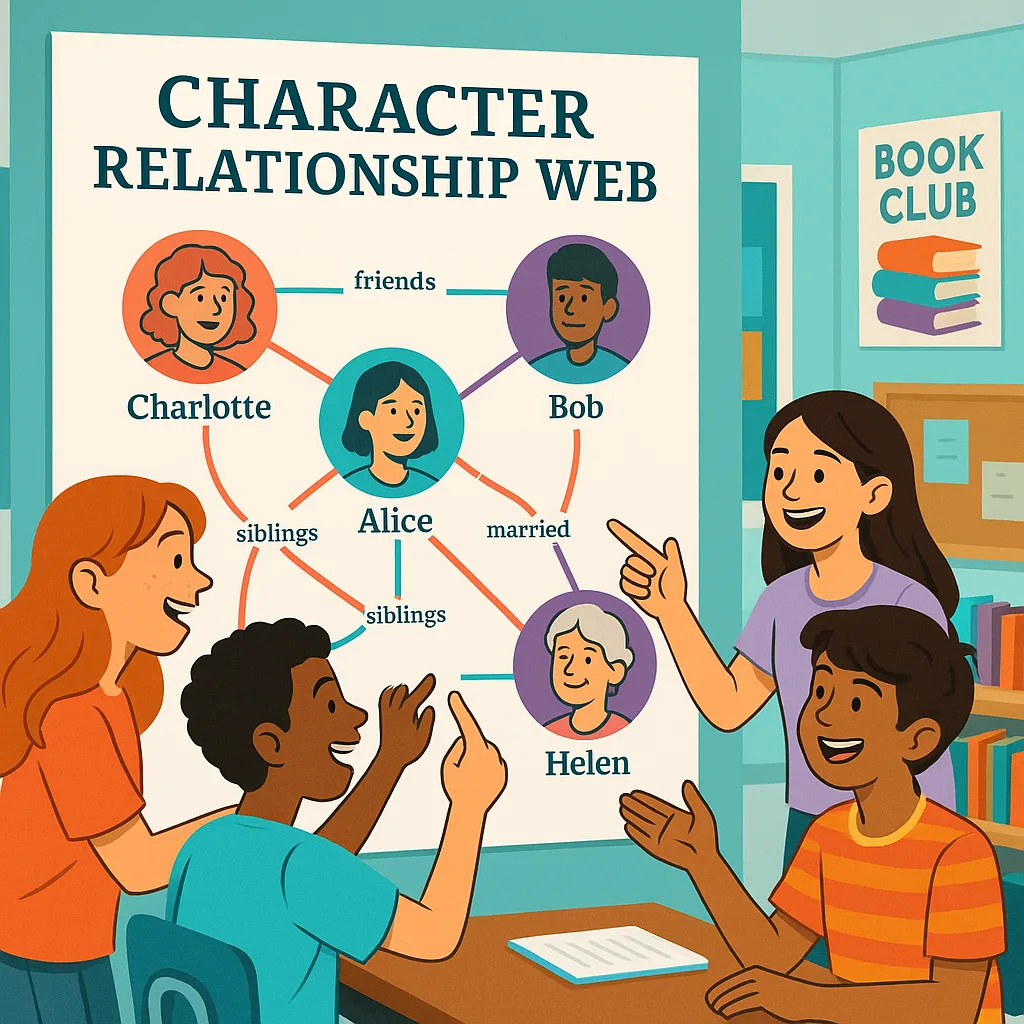
Picture this: Your middle schoolers are diving deep into “The Outsiders,” but instead of traditional discussion circles, they’re creating vibrant character analysis posters that literally map relationships and conflicts. Welcome to the world of visual book clubs, where a teacher poster maker for book clubs becomes your secret weapon for unlocking deeper literary understanding. Furthermore, this approach transforms abstract concepts into tangible visual experiences that resonate with every type of learner in your classroom.

Creating Discussion Prompts That Pop
Gone are the days of typed discussion questions on white paper. Today’s visual book clubs demand discussion prompts that capture attention and spark curiosity. Furthermore, when you design prompts using vibrant colors and engaging layouts, you’re tapping into what educational psychologists call the “von Restorff effect”—the tendency to remember distinctive items better than common ones.
Here’s my go-to framework for creating compelling discussion prompts with the best poster maker for schools:
Question Types
Open-ended promptsDesign Strategy
Use bold fonts and contrasting colors to make questions stand out. Additionally, include visual cues that connect to themes.Visual Elements
Icons & symbolsImplementation
Incorporate relevant imagery that connects to plot points. Moreover, use symbols to represent recurring themes.Layout Design
Strategic spacingBest Practices
Create visual hierarchy with varied text sizes. Furthermore, use white space to prevent cognitive overload.Color Psychology
Emotional impactApplication
Match colors to book themes and moods. Additionally, use warm colors for conflict, cool for resolution.Theme Exploration Through Visual Displays
Themes in literature can feel abstract and elusive to middle school students. However, when we transform these concepts into visual displays, suddenly symbolism becomes tangible and motifs jump off the page. Furthermore, creating theme exploration posters encourages students to synthesize information across chapters and make connections they might otherwise miss.
Implementation Strategies for Your Classroom
Ready to launch visual book clubs in your classroom? Here’s a step-by-step implementation guide that I’ve refined over eight years of teaching:
Week 1-2: Foundation Building
• Introduce visual note-taking techniques
• Demonstrate poster design basics using your teacher poster maker
• Practice with short stories before novels
• Establish collaboration norms

Campus Pro 44 Elite Package – Perfect for large-format book club displays

High-quality coated paper for vibrant book club posters
Week 3-4: Skill Development
• Teach specific visual analysis techniques
• Create templates for different poster types
• Practice peer feedback protocols
• Integrate digital tools with physical posters
Differentiation and Accessibility
One of the most powerful aspects of visual book clubs is their inherent differentiation. Additionally, when you provide multiple ways for students to express their understanding, you’re implementing Universal Design for Learning (UDL) principles. Here’s how visual book clubs support diverse learners:
For Students with Learning Differences: The combination of visual and kinesthetic learning supports multiple processing styles. Furthermore, the teacher poster maker for book clubs allows for easy modifications in font size, color contrast, and layout complexity.
Join the Visual Learning Revolution
The shift toward visual book clubs isn’t just a trend—it’s a response to how today’s students learn best. Furthermore, when we combine the power of literature with visual creativity, we unlock new pathways to comprehension and engagement. Whether you’re starting with a simple Classroom Pro 24 Poster Maker Advanced Package or going all-in with the best poster maker for schools, the investment in visual learning tools pays dividends in student success.
Ready to revolutionize your reading instruction? Explore our paper and media options to find the perfect materials for your visual book club posters. Let’s make literature come alive! #VisualLearning #BookClubs #EdTech