

The Teacher Guide to Printing Classroom Expectations Posters
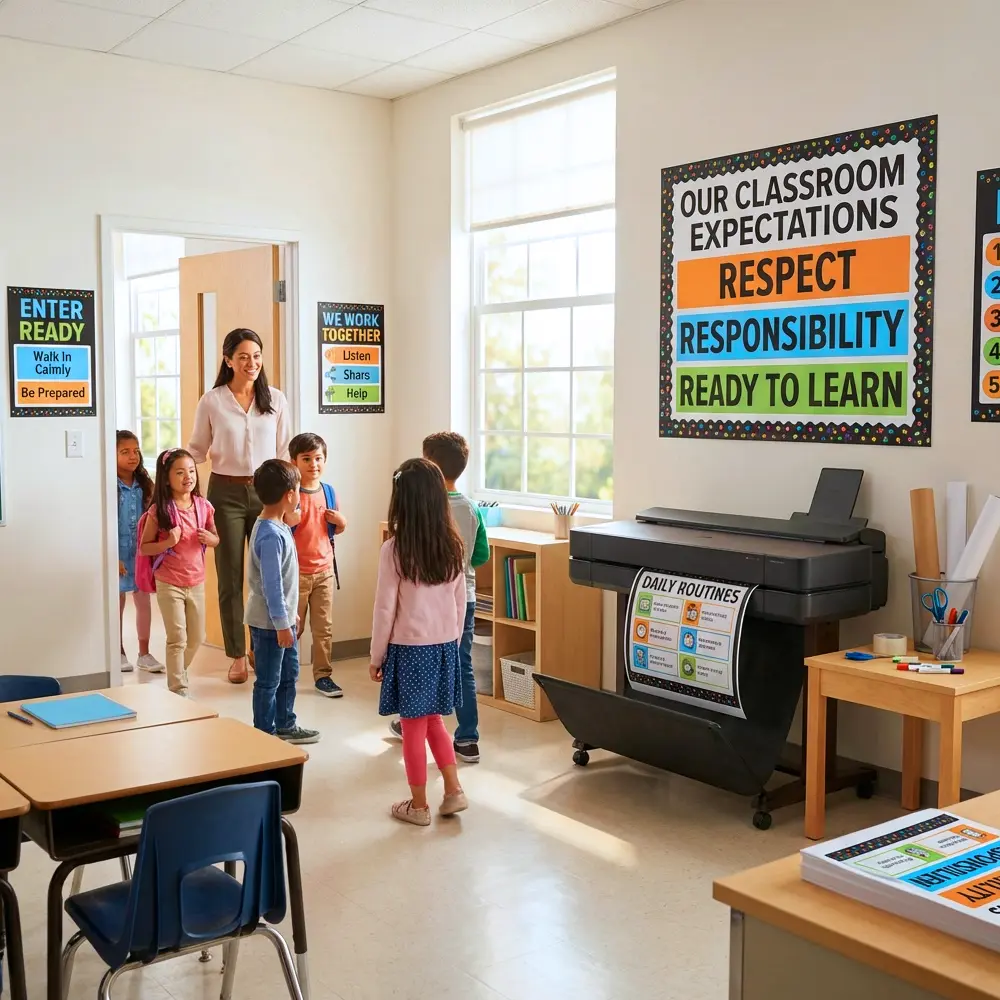
The first morning of school arrives. Students walk into your classroom and instantly read the walls. Before you speak a single word, your posted expectations have already started shaping behavior. That visual first impression matters more than most teachers realize.
Classroom expectations posters do far more than decorate empty wall space. In fact, they serve as silent co-teachers that reinforce your message hundreds of times per day. However, not all expectations displays work equally well. The difference between effective and ineffective posters often comes down to design choices, placement strategy, and alignment with broader educational frameworks.
This guide explores how to create classroom expectations posters that actually influence student behavior. Additionally, we'll examine how different states and regions approach behavioral expectations, so you can connect your classroom visuals to larger educational goals.
Setting tone and culture before you say a word
Research consistently shows that environmental cues shape behavior. According to studies published by the Center on PBIS, students in classrooms with clear visual expectations demonstrate better self-regulation and fewer behavioral incidents. The reason is simple: visual reminders require no teacher intervention to deliver their message.
Furthermore, the first days of school establish patterns that persist throughout the year. When expectations appear on the walls from day one, students understand that these aren't afterthoughts—they're foundational. As a result, consistency between what you say and what students see builds credibility and trust.
Post your expectations before students arrive on the first day. Walking into a room where expectations already exist sends a different message than watching a teacher tape them up during the first week.
What effective expectations posters include
The most effective classroom expectations posters share common characteristics. Specifically, they use positive language, focus on observable behaviors, and remain readable from across the room. Consider these essential elements:
- Positive framing — State what students should do, not what they shouldn't. "Walk in the hallway" works better than "Don't run."
- Specific actions — Vague expectations like "Be respectful" need accompanying examples. What does respect look like in your classroom?
- Visual hierarchy — The most important rules should be most prominent. Use size, color, and placement strategically.
- Age-appropriate design — Kindergarten posters need different aesthetics than high school posters. Match your audience.
- Consistent terminology — Use the same words your school uses. If your building says "be responsible," your poster should too.
Connecting classroom expectations to educational frameworks
Modern classroom management doesn't exist in isolation. Instead, it connects to state standards for social-emotional learning, behavioral frameworks, and character education requirements. When your expectations posters align with these broader frameworks, you reinforce messages students hear throughout the building and district.
According to CASEL, all 50 states have now adopted some form of social-emotional learning standards or guidelines. Consequently, your classroom expectations can directly support these mandates. For example, a poster emphasizing "We listen to understand, not just to respond" reinforces SEL competencies around social awareness and relationship skills.
Similarly, schools implementing PBIS frameworks typically establish three to five schoolwide expectations. Therefore, your classroom posters should incorporate this same language. When students see "Be Respectful, Be Responsible, Be Safe" in the cafeteria, hallway, and your classroom, the consistency amplifies the message.
How different regions approach expectations
Educational culture varies significantly across the United States. As a result, what works in one region may need adaptation for another. These regional spotlights highlight how different areas approach classroom expectations and behavioral frameworks.
Character Counts Integration
Many Texas districts integrate the Character Counts framework into their expectations. The "Six Pillars of Character"—trustworthiness, respect, responsibility, fairness, caring, and citizenship—appear frequently in classroom displays. Additionally, Texas schools often emphasize community and family values, making expectations posters that reference "our classroom family" particularly effective.
Restorative Practices Focus
California has moved heavily toward restorative justice approaches in schools. Consequently, expectations posters in many West Coast classrooms emphasize community repair and dialogue. Phrases like "We solve problems together" and "We make things right" reflect this philosophy. Furthermore, California's diverse population means multilingual expectations posters are common and often expected.
Explicit Instruction Emphasis
Florida's approach tends toward explicit, direct instruction of behavioral expectations. As a result, classroom posters often include step-by-step procedures alongside broader expectations. For instance, an expectations poster might include numbered steps for how to enter the classroom or request help. This specificity aligns with Florida's emphasis on structured learning environments.
Culturally Responsive Approaches
Northeastern states, particularly New York, have emphasized culturally responsive-sustaining education. Therefore, expectations posters increasingly reflect diverse perspectives and avoid assumptions about cultural norms. For example, expectations around eye contact or participation styles acknowledge that different cultures have different norms. This awareness shapes how teachers frame and display behavioral expectations.
Community and Collaboration
Midwestern schools often emphasize community values and collaborative approaches. Classroom expectations frequently reference teamwork and mutual support. Additionally, many Midwest districts have strong PBIS implementation, meaning expectations posters align closely with schoolwide behavioral matrices. The consistency between classroom and building expectations is particularly valued in this region.
The walls of a classroom speak to students every moment they're there. Make sure yours are saying what you intend.
— Middle School Teacher, OhioCreating and printing effective expectations posters
Understanding the theory behind expectations posters is one thing. Actually creating and printing them is another. Here's how to move from concept to classroom-ready displays.
Design considerations
When designing expectations posters, prioritize readability above everything else. A beautiful poster that students can't read from their seats serves no purpose. Consequently, use high-contrast color combinations, simple fonts, and appropriate sizing.
Expectations Poster Design Checklist
- Text readable from 20+ feet away (minimum 72pt for key words)
- High contrast between text and background colors
- No more than 5-7 main expectations per poster
- Consistent with schoolwide PBIS or SEL language
- Includes visuals or icons for early readers
- Laminated or printed on durable material for longevity
- Positioned at student eye level, not teacher eye level

Size and placement matter
A common mistake is printing expectations posters too small. While letter-sized prints work for individual reference, classroom expectations need visibility from anywhere in the room. Therefore, consider 18×24 inch or 24×36 inch formats for primary expectations displays.
Placement should be strategic rather than decorative. The most effective locations include the front of the room where students naturally look, near the door for entering and exiting reminders, and beside frequently used areas like the pencil sharpener or supply station.
Equipment Note: The Classroom Pro Series poster makers produce expectations posters up to 24 inches wide—ideal for classroom-sized displays. For larger formats needed in common areas, the Campus Pro Series handles widths up to 44 inches. Not sure which fits your needs? The equipment quiz can help.
The economics of in-house printing
Outsourcing poster printing creates a barrier to updating expectations displays. When a single poster costs $40-75 from a print shop, teachers hesitate to refresh displays or create situation-specific versions. In contrast, in-house poster production brings costs below $2 per print.
This economic shift changes what's possible. Instead of one generic expectations poster, teachers can create context-specific versions for different activities. Science lab expectations differ from group work expectations. Test-taking expectations differ from free reading expectations. When printing is affordable, this level of specificity becomes practical.
Create a template with your core expectations and swap out activity-specific additions as needed. This maintains consistency while allowing customization—and maximizes your poster investment.
Making expectations posters work in practice
Even perfectly designed expectations posters fail without proper implementation. The visual alone doesn't change behavior—it's how you reference and reinforce those visuals that matters.
During the first week of school, explicitly teach each expectation. Point to the poster. Have students read it aloud. Role-play what each expectation looks like. According to PBIS research, this direct instruction of expectations significantly improves student compliance compared to simply posting rules.
Throughout the year, continue referencing the posters. Instead of saying "Stop talking," point to the relevant expectation. Instead of lecturing about behavior, ask students which posted expectation applies to the current situation. This shifts responsibility to students and reinforces visual learning.
Finally, involve students in creating expectations when appropriate. Research from Character Lab suggests that student ownership of behavioral expectations increases buy-in and compliance. Even if you have non-negotiable expectations, allowing students to help word or design the posters creates investment.
Ready to print expectations posters that set the right tone from day one? Browse poster maker packages for your classroom, or request a quote for your specific situation. Questions? Contact the School Poster Makers team.